
Between a growing bump, new aches, and a mind buzzing with to‑do lists, sleep in pregnancy can feel elusive. The aim isn’t “perfect sleep”—it’s safer, more comfortable, more consistent sleep that supports your health and helps you feel steadier day to day. With a few simple routines, a supportive pillow setup, and evidence‑informed tweaks, you can improve sleep hygiene and reduce nighttime stress before baby arrives.
In this guide, we’ll cover safe sleep positioning in pregnancy, practical bedtime routines, temperature and bedding tips, and small adjustments that bring big relief.

Plus some sleep tips and advice from Catherine Thompson, founder of Completely Baby and an INPAA Baby Safety Ambassador.

Why sleep hygiene matters in pregnancy
- Your body is working overtime. Blood volume, hormones, and metabolism shift—sleep helps regulate mood, immunity, and recovery.
- Better sleep supports daytime energy, lowers stress perception, and may help with common discomforts like hip/pelvic pain and reflux.
- Preparing now builds habits you’ll lean on in postpartum, when rest arrives in shorter bursts.
For a friendly, evidence‑informed overview of sleep changes in pregnancy, see the Sleep Health Foundation’s guide on pregnancy sleep Sleep Health Foundation and the Royal Women’s Hospital (Melbourne) page on getting comfortable and sleeping safely Royal Women’s Hospital.
Safe sleep positioning during pregnancy
- Side‑sleeping after the first trimester: Guidance commonly recommends avoiding prolonged flat‑on‑back sleeping from mid‑pregnancy. Side‑sleeping—often the left side—is generally encouraged. Don’t panic if you wake up on your back; simply roll back to your side when you notice.
- Use support to make side‑sleeping easy: A modular pregnancy pillow can support your bump, stabilise your back, and align hips and knees so you’re not fighting gravity all night.
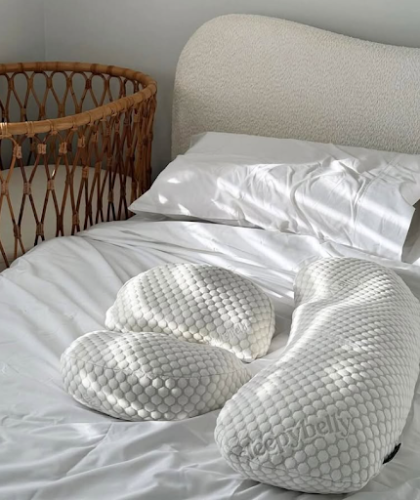
- Try a three‑piece setup: a wedge under the bump, a long back support curved along your spine to discourage rolling, and a slim cushion between knees.
- A compact design that doesn’t dominate the bed helps you and your partner sleep better together. Explore the supportive, adjustable Sleepybelly Pregnancy Pillow.
Quick comfort check:
- Belly feels gently lifted, not squashed
- Hips feel level; knees have light support
- Back support stops you from rolling onto your back
- You can switch sides without rebuilding your pillow fortress

Build a calming, pregnancy‑friendly bedtime routine
Aim for consistency rather than perfection. A 30–45 minute wind‑down helps your nervous system settle.
- Soften the evening: dim lights 60–90 minutes before bed; keep screens on night mode or wrap up scrolling earlier.
- Lukewarm shower: cools skin slightly and signals “sleep time” without a cold‑shock rebound.
- Light snack (if needed): protein + complex carb (e.g., yoghurt and oats) can stabilise overnight blood sugar.
- Gentle body comfort: magnesium‑based creams massaged into calves and shoulders can feel relaxing for some. If you prefer, try a light, unscented moisturiser as part of a tactile wind‑down.
- Stretch and breathe: 5 minutes of gentle hip and back stretches plus slow belly breathing; keep it comfortable and doctor‑approved.
- Write it down: park tomorrow’s to‑dos on paper to reduce the 2am “mind loop”.
If you wake overnight:
- Keep a soft, warm light by the bed.
- Sip water, retuck your bump/back support, try 4–6 slow breaths, and avoid clock‑watching.
- If reflux flares, prop your torso slightly and keep meals earlier and simpler at night.
Temperature, bedding, and pyjamas: small changes, big difference
- Keep the room cool: around 18–20°C where possible, with a gentle fan angled across the mattress for airflow (not at faces).
- Choose breathable layers: percale cotton, linen, or bamboo/cotton blends for sheets; a lighter GSM doona or two single doonas on a shared bed to manage different temperature needs.
- Wear moisture‑wicking sleepwear with stretch and an adjustable waistband to reduce pressure on the belly and pelvis. Many mums like the soft bamboo/cotton blend in Sleepybelly’s 3‑Piece Maternity Pyjama Set for warm nights.
- Use breathable pillow covers and avoid heavy foam “fortresses” that trap heat. The airflow‑friendly, modular Sleepybelly Pregnancy Pillow supports side‑sleeping without overheating.
Mind‑body strategies that actually help
- Daylight and movement: morning light exposure and gentle daily movement (walks, prenatal‑approved exercises) can improve your sleep drive and circadian rhythm.
- Nap with intention: short (20–30 mins) and earlier in the day; long late naps can delay night sleep.
- Caffeine timing: consider a cut‑off around early afternoon; watch for reflux triggers at night.
- Kind self‑talk: if sleep is patchy, remind yourself that rest is still beneficial. Lie quietly, breathe, and release the pressure to “perform” sleep.
Gentle products that support safe, comfortable sleep
- Sleepybelly Pregnancy Pillow: a modular, three‑piece pillow that supports your bump and back to encourage side‑sleeping and reduce hip/back strain. It converts to a breastfeeding pillow postpartum.
Explore it here: Sleepybelly Pregnancy Pillow - 3‑Piece Maternity Pyjama Set: breathable bamboo/cotton/elastane rib with an adjustable waistband that’s gentle on growing bumps (and C‑section scars later).
See sizes and colours: Maternity Pyjamas
Preparing for postpartum: safe sleep education and expert support
While you’re focused on your own sleep now, it’s also a great time to explore safe infant sleep information you’ll use after birth:
- INPAA (Infant and Nursery Products Association of Australia) provides standards and guidance for safer products and practices in the nursery. Look for INPAA‑aligned education and accredited brand ambassadors when choosing products and learning about safe sleep environments INPAA.
- For practical, compassionate guidance on baby sleep and settling – explore Completely Baby, led by Catherine (One of Australia’s leading sleep consultants and INPAA brand ambassador). You’ll find accessible tips for creating safer, calmer routines once baby arrives:
Learning safe sleep principles (like a clear, flat, firm surface for baby, and keeping the sleep space free of loose items) during pregnancy removes a lot of stress later. You can align your nursery choices with recognised safety guidance and build a gentle plan for those early weeks.
The before‑baby takeaway
Perfect sleep isn’t the goal. Safer, more supported sleep is. Focus on a simple wind‑down, side‑sleeping made comfy with a supportive pillow, breathable bedding, and kind expectations of yourself. Build these habits now and you’ll carry them into the newborn months—where little pockets of rest matter more than ever.
When you’re ready to plan for life with baby, add credible, Australian guidance to your toolkit—Catherine at Completely Baby shares approachable, safety‑aligned advice you can trust. And for bump‑and‑back comfort that grows with you, the compact, adjustable Sleepybelly Pregnancy Pillow helps you rest easier before baby arrives.

FAQ pregnancy sleep questions
-
Is it dangerous if I wake up on my back?
Don’t stress. Many people wake in different positions. The goal is to set up your bed so side‑sleeping is easier and you spend more of the night on your side. If you wake on your back, just roll back to your side and get comfy again. For context, see the Sleep Health Foundation and Royal Women’s Hospital resources linked below.
-
Which side is best?
Left side is often recommended, but comfort and consistency matter most. Reduce pressure points with a wedge under your bump, back support, and a small cushion between your knees.
-
How do I manage hip or pelvic pain at night?
Keep knees lightly supported, avoid crossing legs, and adjust your pillow pieces so your hips feel level/straight. A compact, adjustable pregnancy pillow can make a noticeable difference. If pain persists, check in with your healthcare provider and consider a women’s health physio or osteo.
-
I overheat at night—any quick fixes?
Switch to breathable sheets, wear moisture‑wicking PJs, keep water within reach, and angle a quiet fan across the bed.